Engaging Young Minds: Exploring Children’s Rights through Audiovisual Storytelling
Farriba Schulz
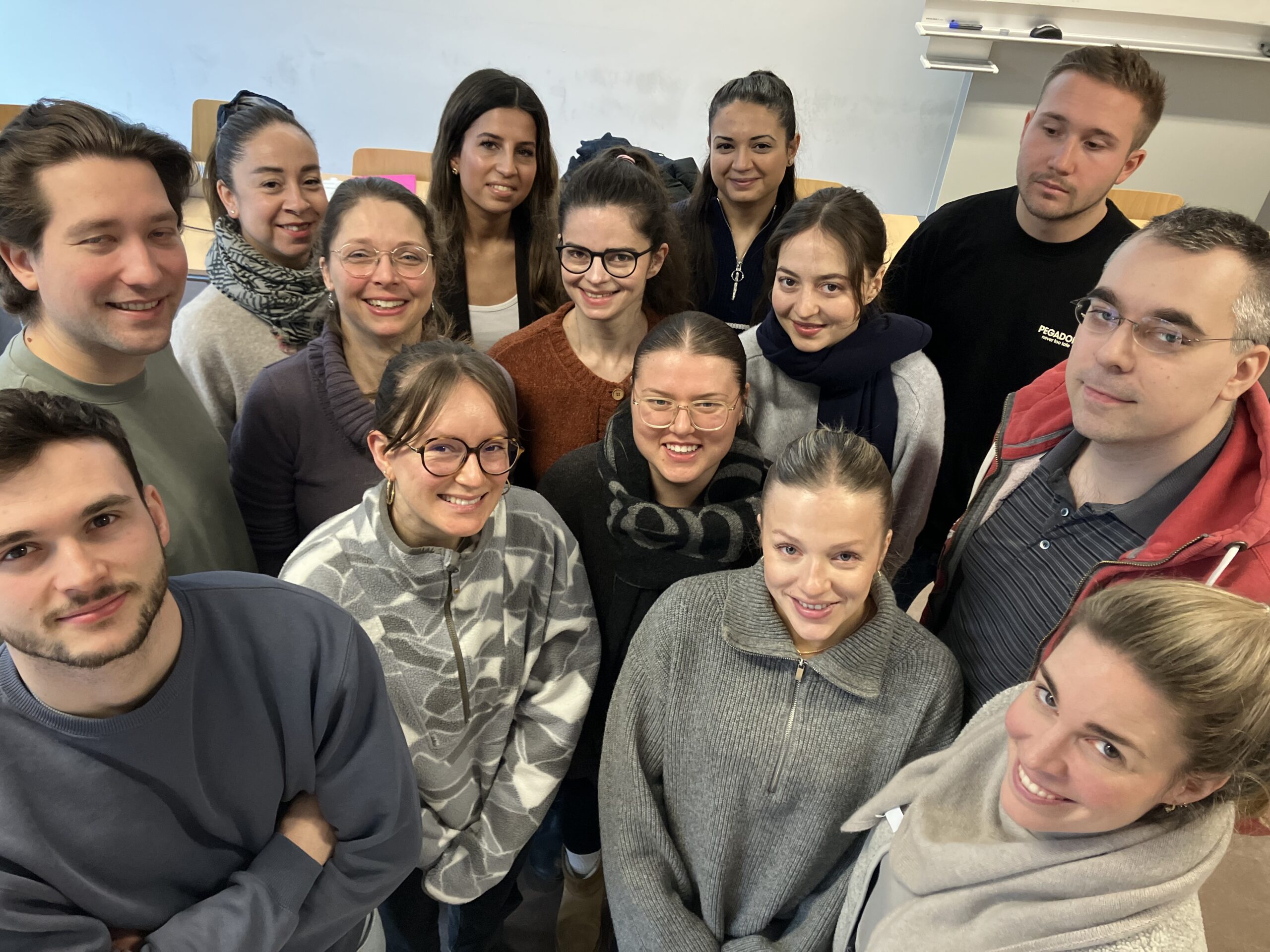
In Winter 2025 master students at Humboldt-Universität zu Berlin had the opportunity to support primary students of a Berlin-based primary school produce short films by kids for kids. As part of the Master seminar “Seen & Heard: Children’s Rights in and with Children’s Media”, led by Dr Farriba Schulz, the university students and young people came together to create creative protest films focusing on children’s rights. Bringing those groups together, the university students explored the timely question why media literacy and children’s rights are important, what different methods exist, and how they can promote film education and human rights education in schools. The university students were Wit(h)nesses alongside the young people as they developed their own narratives, and, in the process, explored their understanding and perspectives on this topic. For the university students, this meant that they were able to both guide processes of creating audiovisual content and witness the young people constructing their perceptions of reality firsthand.
The university project involved several sessions at the primary school, where students cooperated in small groups. Each group discussed and planned their film ideas. This collaborative effort culminated in the production of films that the participants watched, reflected upon, and, where, necessary, revised. The initiative showcased the profound impact that creating media focusing on children’s rights has on young learners.
The Power of Media Creation
The key challenge in this process the students faced was the necessary role shift for educators. The student teachers needed to relinquish control and focused rather on moderating learning processes, encouraging children to take initiative and responsibility. This shift from traditional teacher-centered methods to student-driven learning was crucial to the concept “films by kids for kids”.
However, the potential of intergenerational film productions in classroom settings were evident not only in the results but also in the processes that lead to them. As a lot of the university students noted in their assignments, media creation not only makes abstract concepts like children’s rights understandable but also empowers children to experience participation directly through creative decisions (Hüpping & Kamin, 2020). This experiential learning connects to Article 12 of the UN Convention of the Rights of the Child, and adheres to the Lundy model, emphasizing the four dimensions of child participation–space, voice, audience, and influence (Lundy, 2007).
Through media production, children shift from being passive recipients to active creators of content. Creating films about children’s rights engages children in the active construction of reality and offers opportunities for negotiation processes, where children decide which experiences from their environment, including media content, into their understanding of the world, they want to integrate. They make choices about what matters, how to structure it, and the messages they want to convey. Similar to the recommendations of the Digital Civic Toolkit , this aligns media use and creation with social actions influenced by individual and societal conditions. Such creation in schools becomes an essential space for engaging with children’s rights by making participation a tangible social practice (Hüpping & Kamin, 2020).
Incorporating such media projects into the curriculum enriched and challenged traditional educational approaches, highlighting the didactic potential. Through engaging with film and storytelling, the participants not only grasped different perspectives but contributed uniquely to ongoing dialogues about children’s rights and roles in the community.
Happily Ever After…
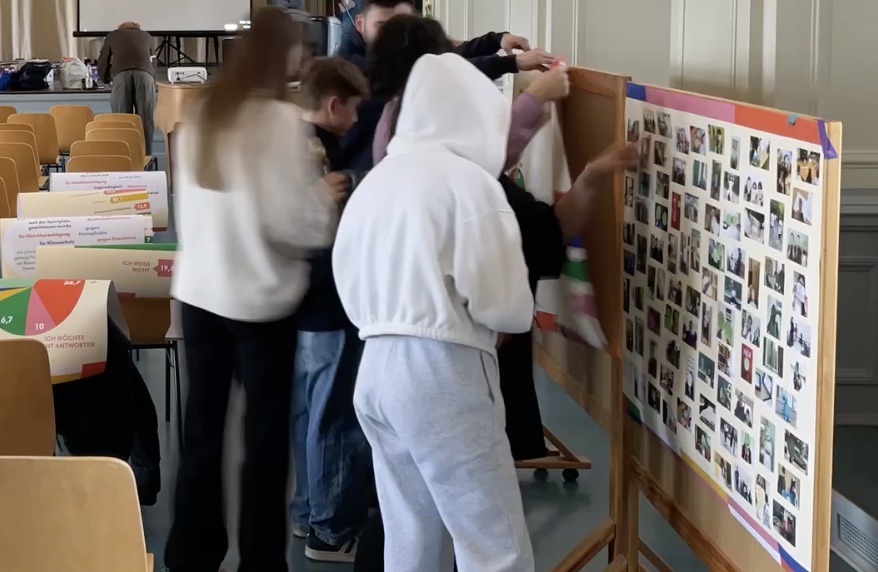
But the story didn’t end there, because the films the children had created were going to finally be presented at the premiere celebration at the school. To mark the occasion, the children invited other school classes, teachers, parents, arts, and culture organizations that partner with the school, and project participants. Everyone pitched in, set the exhibition of research results, poems, self-portraits, and books up. The students went over their scripts one last time for the emceeing, the interviews, and the report, because the celebration was also about Questioning the Grown-Ups in addition to presenting results.
The fact that so many people involved in the educational and cultural network that is relevant to the children’s daily school life had gathered in the auditorium, listening attentively to what the children had to say, had already shifted perspectives. It was also an acknowledgement that responsibility for democratic citizenship learning cannot be confined to schools and teachers but extends across society (Biesta, 2011).